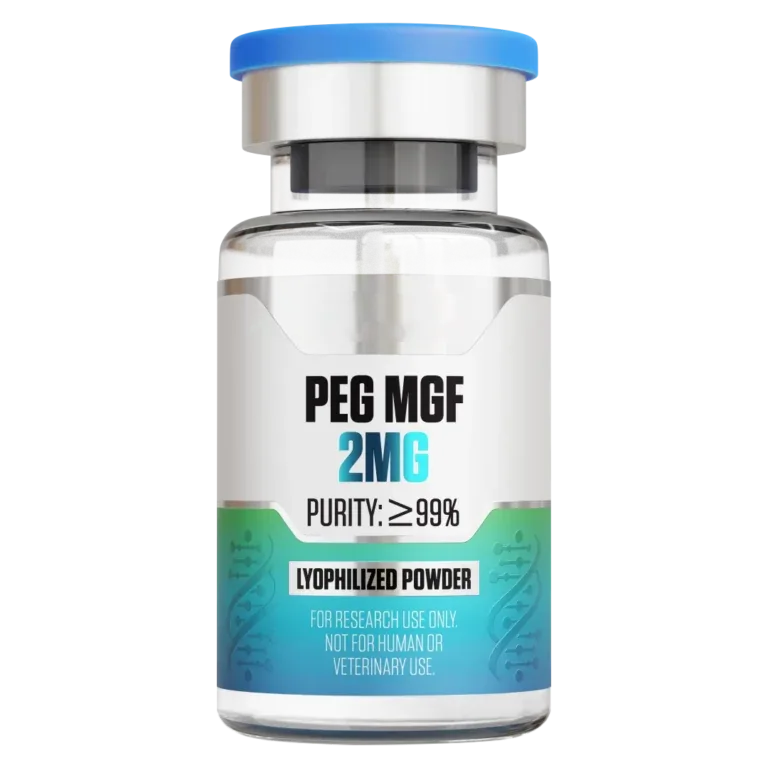
PEG MGF (2 mg Vial)
PEG MGF (2 mg Vial): reconstitution reference for research laboratories. Includes the diluent volume and resulting concentration, syringe-unit conversion, vial and consumable planning, and storage guidance.
CAT No:
CAS No:
Synonyms/Alias:PEG MGF
M.F/Formula:
M.W/Mr.:
Purity:Specification by inquiry
- Sequence, purity and scale confirmation
- CoA and technical documentation requests
- API, research and cosmetic peptide options
- Distributor and institution quotation support
PEG MGF (2 mg Vial): reconstitution reference for research laboratories. Includes the diluent volume and resulting concentration, syringe-unit conversion, vial and consumable planning, and storage guidance.
Quickstart
Reconstitute: Add 3.0 mL bacteriostatic water (max vial capacity) → ~ 0.667 mg/mL concentration.
Typical daily range: 200–500 mcg once daily (gradual titration over 8 weeks).
Easy measuring: At 0.667 mg/mL, 1 unit = 0.01 mL ≈ 6.67 mcg on a U-100 insulin syringe.
Storage: Lyophilized: freeze at −20 °C (−4 °F); after reconstitution, refrigerate at 2–8 °C (35.6–46.4 °F); avoid freeze–thaw cycles.
Notes
Practical considerations for consistency and safety. Use new sterile insulin syringes; dispose in a sharps container. Rotate injection sites (abdomen, thighs, upper arms) to reduce local irritation. Inject slowly; wait a few seconds before withdrawing the needle. Document daily dose and site rotation to maintain consistency. No clinical trials of PEG MGF have been completed; effects have been demonstrated in animal and cell models only.
Single peptide protocol reference : Available for related research, development or formulation inquiry workflows.: Available for related research, development or formulation inquiry workflows.
Reconstitution and handling reference : Available for related research, development or formulation inquiry workflows.: Available for related research, development or formulation inquiry workflows.
Research-use documentation inquiry : Available for related research, development or formulation inquiry workflows.: Available for related research, development or formulation inquiry workflows.
Peptide Vials (PEG MGF, 2 mg each): 8 weeks ≈ 10 vials
12 weeks ≈ 17 vials
16 weeks ≈ 24 vials
Insulin Syringes (U-100): Per week: 7 syringes (1/day)
8 weeks: 56 syringes
12 weeks: 84 syringes
16 weeks: 112 syringes
Bacteriostatic Water (10 mL bottles): Use ~3.0 mL per vial for reconstitution. 8 weeks (10 vials): 30 mL → 3 × 10 mL bottles
12 weeks (17 vials): 51 mL → 6 × 10 mL bottles
16 weeks (24 vials): 72 mL → 8 × 10 mL bottles
Alcohol Swabs: One for the vial stopper + one for the injection site each day. Per week: 14 swabs (2/day)
8 weeks: 112 swabs → recommend 2 × 100-count boxes
12 weeks: 168 swabs → recommend 2 × 100-count boxes
16 weeks: 224 swabs → recommend 3 × 100-count boxes
Send product, purity, quantity, destination and documentation requirements. Our team will follow up through online consultation or email.
WhatsApp: +852 52102460 +1 4422847013
Address: Huangpu District, Guangzhou, China